Let’s Go Birding Internship Program Enters 3rd Year
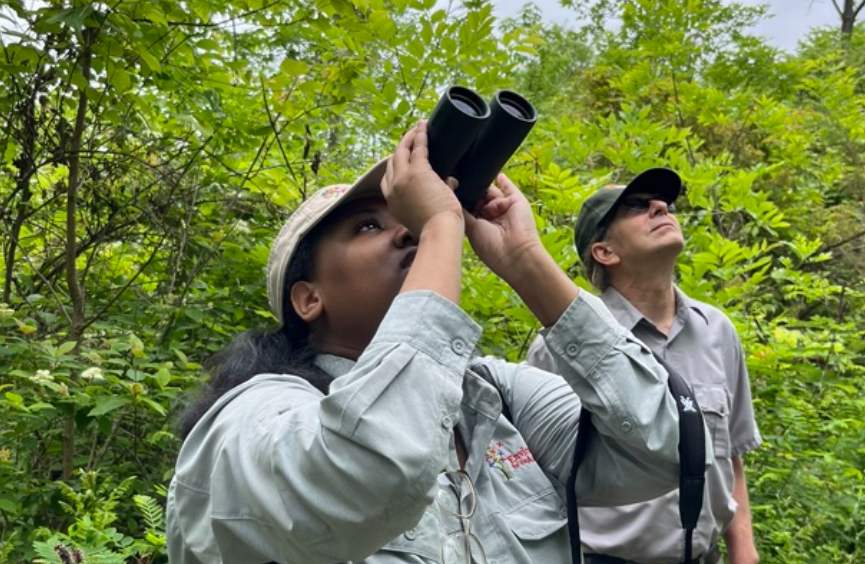
Image description: Two people stand outdoors in a lush, green, leafy area, looking upward into the trees. In the foreground, a 2024 intern wearing a light colored long sleeve button down shirt and a brimmed hat holds binoculars to their eyes, scanning the canopy above. Slightly behind them, a Park Ranger wearing a gray shirt and a dark baseball cap also looks upward, following the same line of sight. Dense green foliage fills the background, suggesting a forested or park setting during the growing season.Tomorrow, December 19, 2025, applications open for the third year of the Let’s Go Birding Internship, formerly known as the Birdability Internship. As we prepare to welcome a new cohort of interns for spring/summer 2026, we are taking a moment to celebrate what this program has already made possible and the people who have shaped it with care, creativity, and deep commitment to access.
Developed in partnership with Environment for the Americas and the National Park Service, Let’s Go Birding is rooted in a simple but powerful idea. Birding and national parks should be accessible to everyone, including disabled people and folks with other health concerns. This internship creates pathways for early career professionals to build skills in accessible interpretation and inclusive program design while supporting parks as they expand who feels welcomed, expected, and able to participate.
Over the past two years, interns have worked directly within National Park Service sites to improve birding programs, communicate accessibility information, and design experiences that center people with a wide range of access needs. Interns have supported visitors who are Blind or low vision, d/Deaf or Hard of Hearing, neurodivergent, or living with mobility disabilities, while also strengthening their own professional pathways in conservation, education, and public lands work
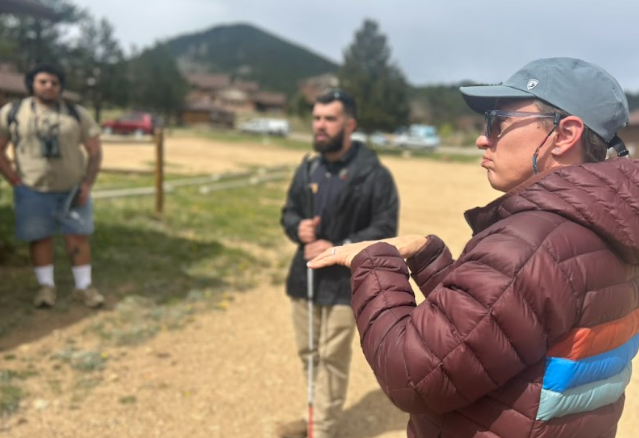
Image description: An ASL interpreter wearing sunglasses, a cap, and a puffy coat with bright stripes is in the foreground with a d/Deaf intern wearing shorts and a t-shirt and with binoculars around his neck, watching from across the grassy and rocky area between them. Another intern stands with a white cane, wearing a dark windbreaker and khaki pants listening intently. Rocky Mountain National Park peaks rise behind them.The impact of this work is both measurable and deeply human. In 2025 alone, interns reached more than 1,600 people through bird walks, tabling events, and World Migratory Bird Day programming. They developed multisensory learning tools, accessible birding resources, and site-specific recommendations that will continue to shape park programming long after the internship ended.
One intern reflected, “It did not occur to me that I could work as a ranger until I saw others in that field. I felt encouraged knowing that other Deaf people work in the federal workplace.” Another shared how birding by sight, touch, and movement opened doors that traditional birding spaces had not. These reflections underscore why representation, access, and intentional design matter in the outdoors.
Looking Ahead to 2026
For the 2026 season, four National Park Service sites have been selected through a competitive application process to host Let’s Go Birding interns focused on accessible birding and inclusive programming:
Colorado National Monument in Colorado for one intern
Cuyahoga Valley National Park in Ohio for two interns
Medgar and Myrlie Evers Home National Monument in Mississippi for two interns
Rocky Mountain National Park in Colorado for one intern
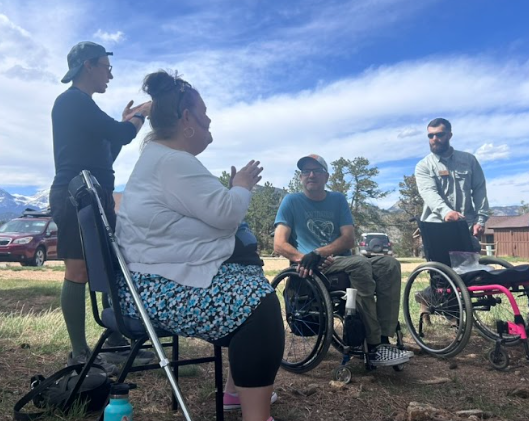
Image description: Birdability's ED, Cat, sits in a chair with her forearm crutch leaning against the back. She is wearing a floral skirt and leggings, along with a white sweater and is talking as an ASL interpreter in a long-sleeved t-shirt, shorts, and cap signs behind her. In front of her is another speaker at the internship training using a manual wheelchair and wearing (most excellent) checkered black and white Vans on his feet, along with a t-shirt,khakis, and a cap. He and another intern/speaker who is standing behind a wheelchair wearing sunglasses and a khaki long-sleeved shirt look toward Cat. The bright blue sky is streaked with white clouds aboved them.Each of these parks submitted strong proposals demonstrating a commitment to accessibility, community engagement, and the long-term integration of inclusive birding practices. Interns placed at these sites will receive training, mentorship, and hands-on experience designing programs that reflect the diverse ways people connect with birds and nature.
Who Should Apply or Share
The Let’s Go Birding Internship is ideal for students and early career professionals interested in birds, public lands, education, accessibility, disability justice, or community-centered conservation. Interns do not need to arrive as expert birders. What matters most is curiosity, care, and a desire to help build outdoor spaces where more people belong.
If this sounds like you, we encourage you to apply. If it sounds like someone you know, please share the opportunity widely. Many of our strongest interns came to the program because someone saw their potential and passed the opportunity along.
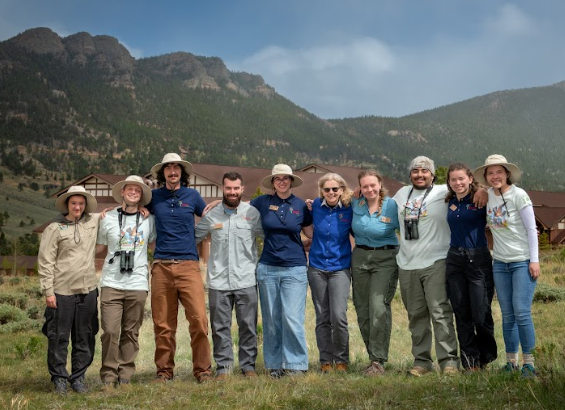
Image description: Most of the 2025 Let's Go Birding Interns (9 of the 10) stand with EFTA Director Susan in front of the Rocky Mountains while at a training held near Rocky Mountain Park. The interns are wearing casual outdoors clothing and many of them have hats or binoculars. All of them are smiling broadly at the camera. Applications open December 19, 2025! You can learn more and apply through Environment for the Americas at the Let’s Go Birding Internship page at https://environmentamericas.org/efta-internships-landing-page/accessibility-internship-landing-page/
As we enter our third year, we are grateful to the interns, park partners, and community members who have helped shape this program. Let’s Go Birding continues to show what is possible when access is a core value of birding and conservation work.
We cannot wait to see what the next cohort brings and are so grateful for your help finding them!
