
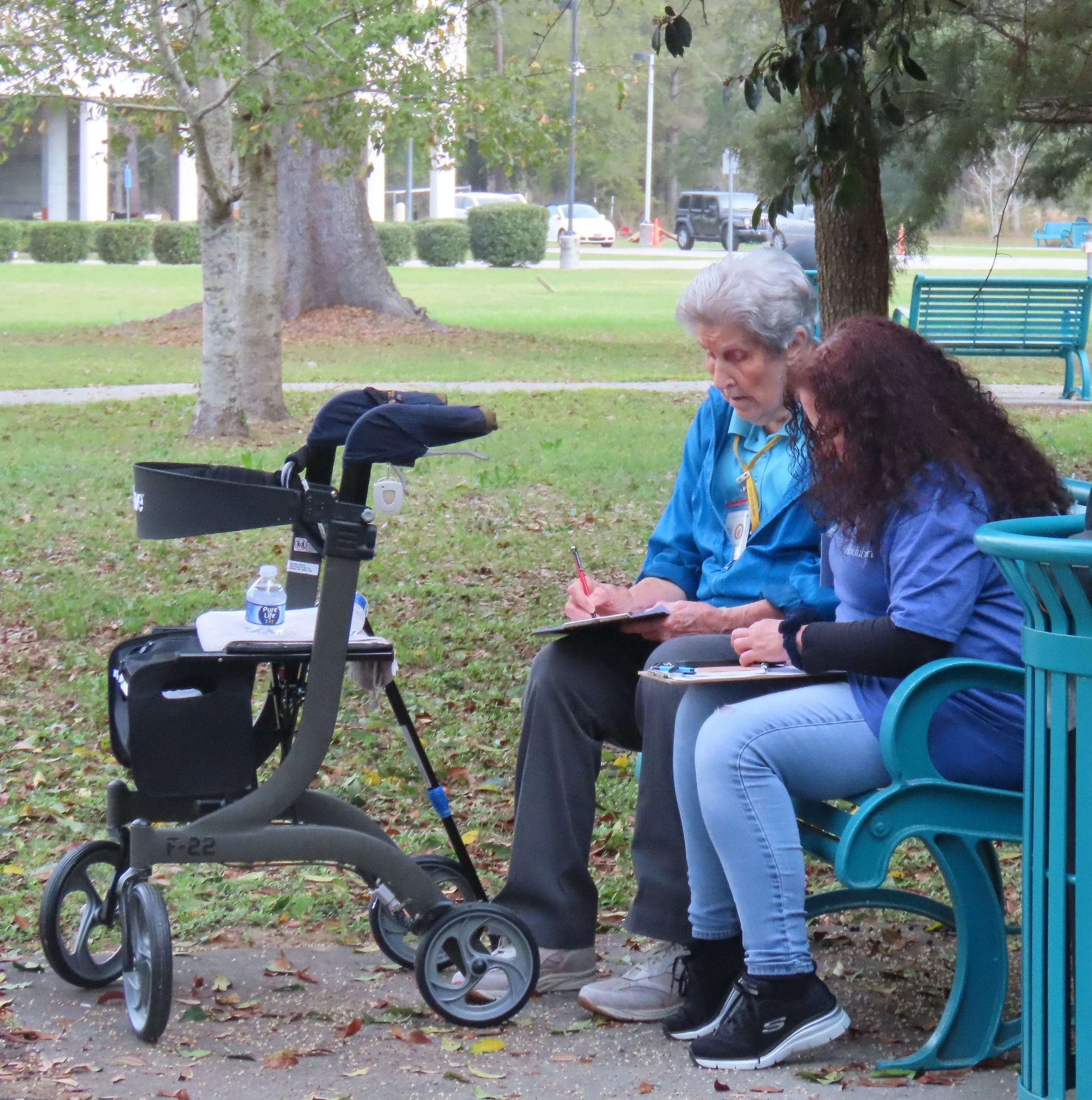
Image description: A resident and a volunteer share a moment of nature journaling about the birds they were hearing/seeing on a BOP Outing at the Armed Forces Retirement Home in Gulfport. They are sitting on a bench, heads close together, working on their nature journaling activity with a rollator parked in front of the bench on a paved path with leaves on the ground.The Armed Forces Retirement Home in Gulfport, Mississippi, holds a special place in Birdability's history.
In 2024, it became the first Birdability Outreach Program (BOP) site, helping Birdability explore what it looks like to bring accessible birding, nature connection, and community building directly to people who may face barriers to participating in traditional birding activities. The program was made possible in part through support from the Christopher & Dana Reeve Foundation's Quality of Life Grant, which helped Birdability and local partners create opportunities for residents to engage with birds and nature in meaningful and accessible ways.
Since then, Birdability Captains Amanda Douglas and Jessica Martin of Audubon Delta have helped the program grow into something far beyond a series of bird outings. What they have created is a welcoming space where residents can connect with birds, creativity, conservation, and each other.
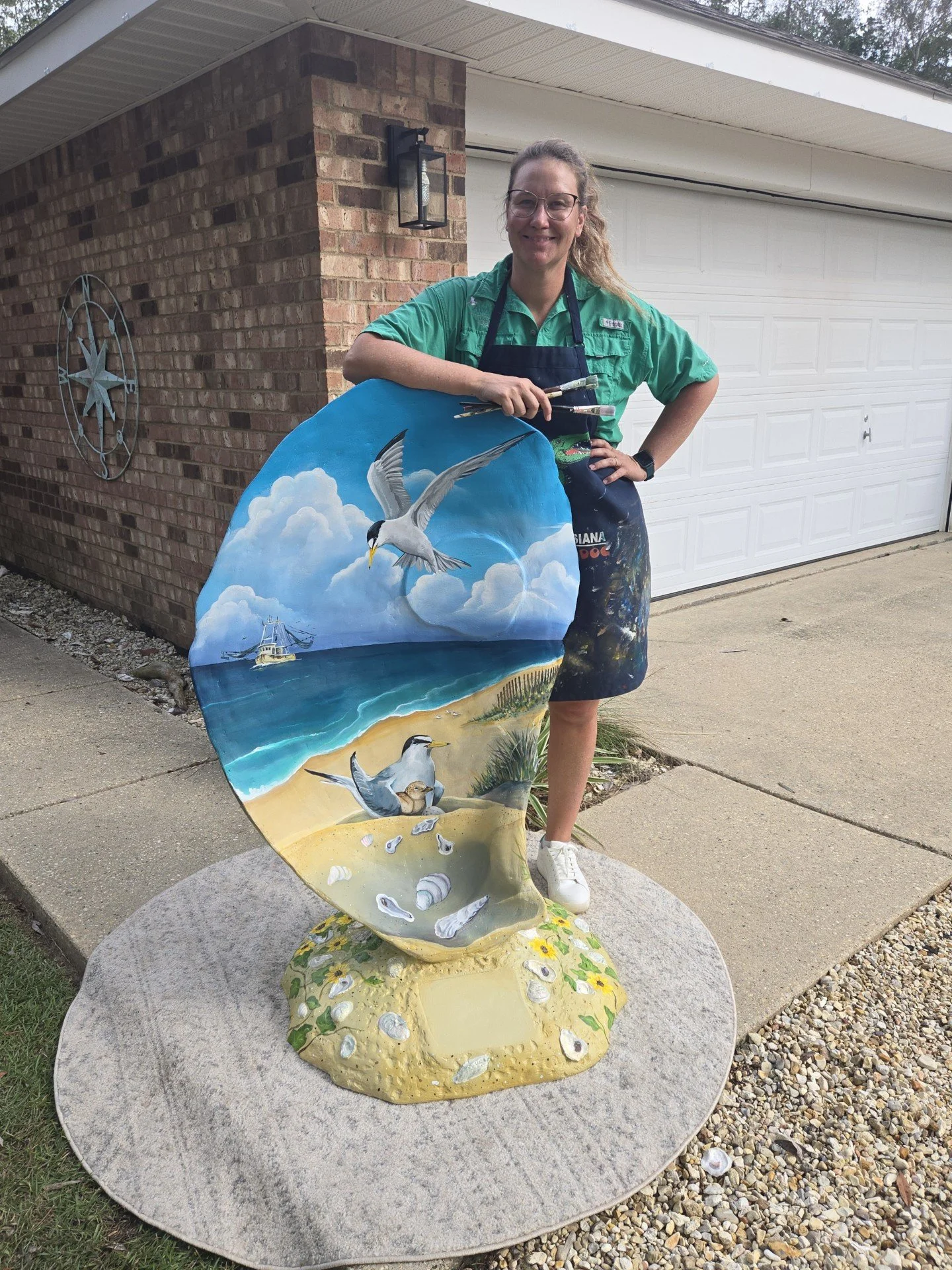
Image description: Birdability Captain and Audubon Delta Stewardship Coordinator, Amanda Douglas, stands in front of a fiberglass oyster shell that will be placed in downtown Pass Christian that she was selected to paint. The mural is of a beach nesting bird and chick on the sand with another tern parent hovering above. The ocean is vibrant behind the birds, and there are shells on the sand in the foreground. The outings themselves are intentionally relaxed and accessible. Residents gather together, spend time observing birds, listening to bird sounds, sharing stories, and enjoying the natural spaces around them. The retirement home's location along the Mississippi Gulf Coast offers an incredible variety of birds, from migratory warblers moving through the live oaks to coastal species visible from the property.
But as Amanda explained, the birding is only part of the story.
"I think the participants seem to enjoy the opportunity to just slow down and notice the natural world around them."
That act of slowing down has created opportunities for learning, conversation, and connection. Residents have begun noticing birds between programs, sharing their own observations, asking questions, and building stronger social connections with one another and with volunteers.
According to Amanda, some of the most meaningful outcomes have been watching participants become more engaged and confident over time.
"Residents are often pointing out birds they've noticed between the programs, and they're wanting to share some of their discoveries."
Participants who were initially hesitant have become more comfortable recording observations, asking questions, and exploring the natural world around them. Amanda also noted stronger social connections among participants and with program volunteers. Those outcomes alone would be worth celebrating, but the program continues to grow in new directions.
Support from the Christopher & Dana Reeve Foundation's Quality of Life Grant allowed Birdability to provide adaptive birding equipment and resources to the Gulfport program, including outreach bags stocked with monoculars, large print field guides, and other birding supplies. These resources have become a regular part of the outings and are also available for residents to borrow independently.
Jessica recalled her excitement when she began reviewing photographs from one of the sit spot birding sessions.
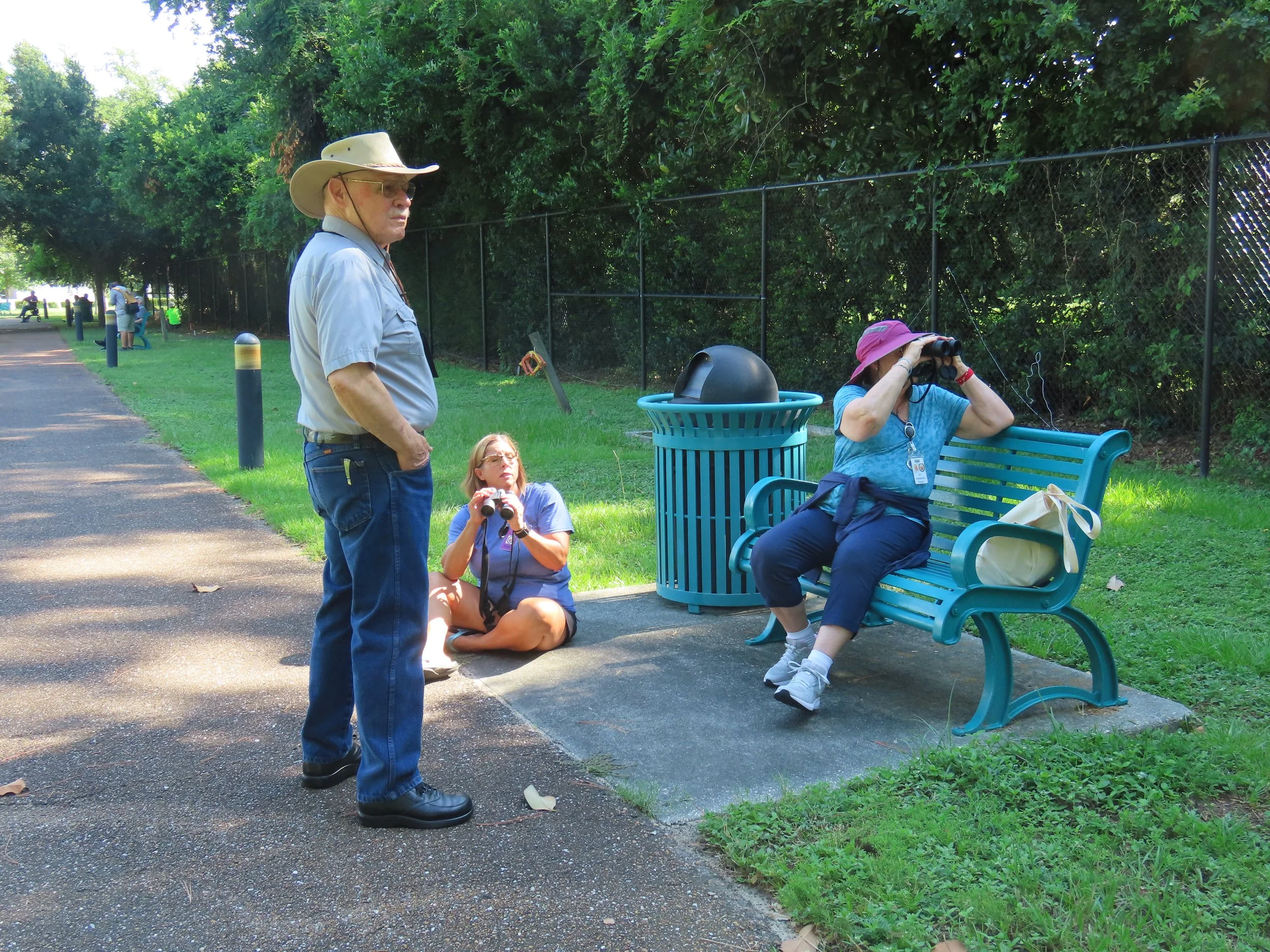
Image description: Small groups of Armed Forces Retirement Home residents gather (sitting or standing) at benches along a paved path. They have bags that hold binoculars or monocular, bird identification cards, and Birdability information. The bags and equipment were provided as part of the Birdability Outreach Program for the residents to use at outings, and to check out to use on their own birding adventures. "I look through all the photos... and almost all the photos that they took during the sit spot outing, they had bags everywhere. I just loved seeing it. I was like, 'Yay! They're using them.'"
The grant also helped support bird feeding stations and technology that allow bird activity to be streamed indoors. Residents who cannot participate in outdoor outings can instead watch birds from their rooms or gather indoors to observe and discuss bird activity together. Accessibility does not stop at the trail's edge, and the team continues to look for new ways to bring birds to people wherever they are.
One of the most innovative parts of the Gulfport program has been the incorporation of nature journaling.
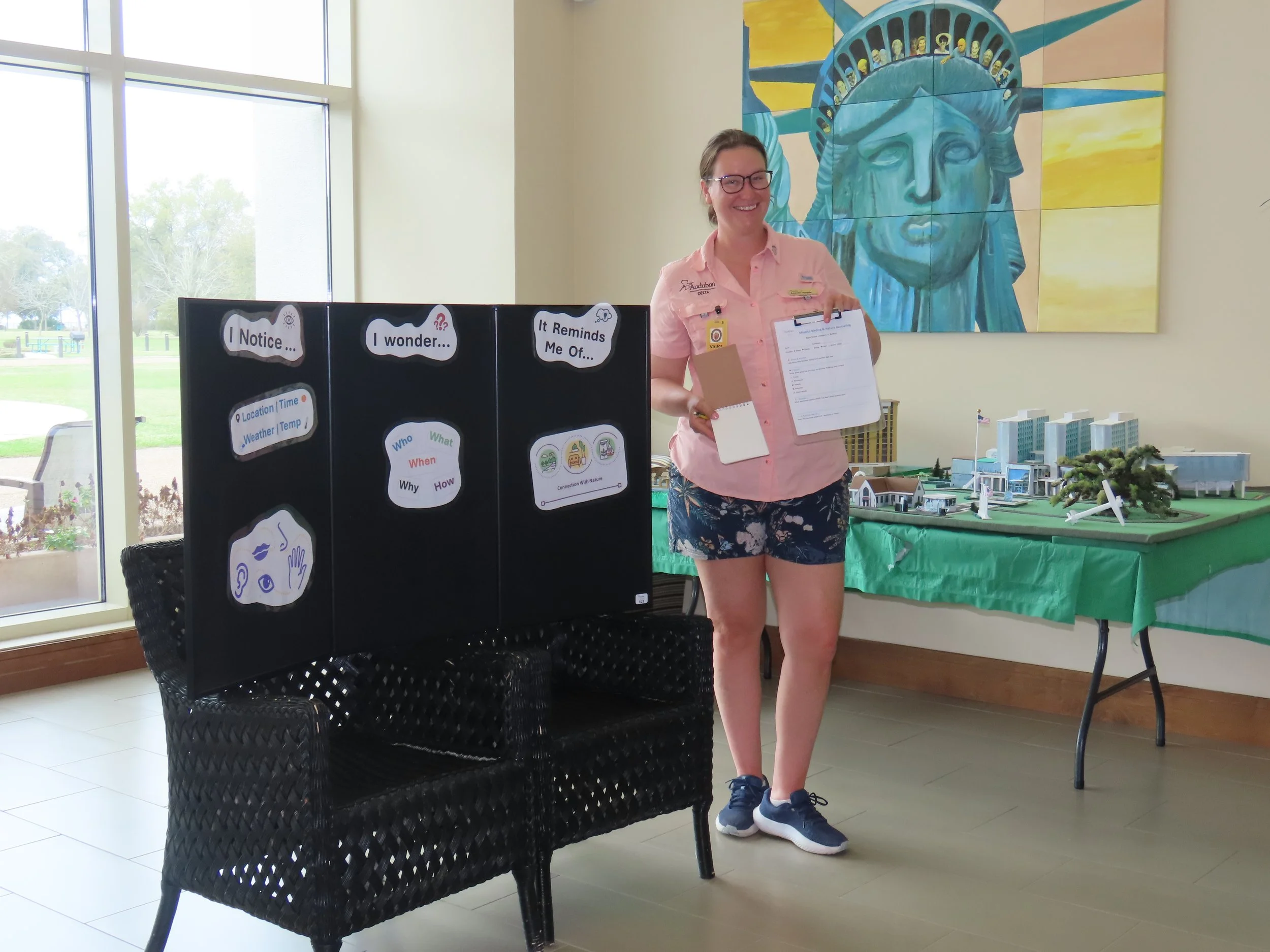
Image description: Amanda Douglas stands in front of a tri-fold board that has sections for, "I notice...", "I wonder...", and "It reminds me of...", which are the prompts she is introducing for a nature journaling activity at the AFRH in Gulfport, MS. She is standing next to the tri-fold in shorts, an Audubon shirt, and glasses and smiling while she holds up a nature journaling activity sheet.Inspired by training through the Wild Wonder Foundation, Amanda introduced residents to nature journaling as a way to engage more deeply with birds and nature through observation, reflection, writing, and art. Participants use prompts such as "I notice," "I wonder," and "It reminds me of..." while recording their experiences through words, sketches, collages, and personal reflections.
One outing in particular stands out.
After discussing mindful birding and the importance of using all of the senses available to them to engage with nature, the group headed outside with their journals. While walking the grounds, they heard rustling in a nearby shrub.
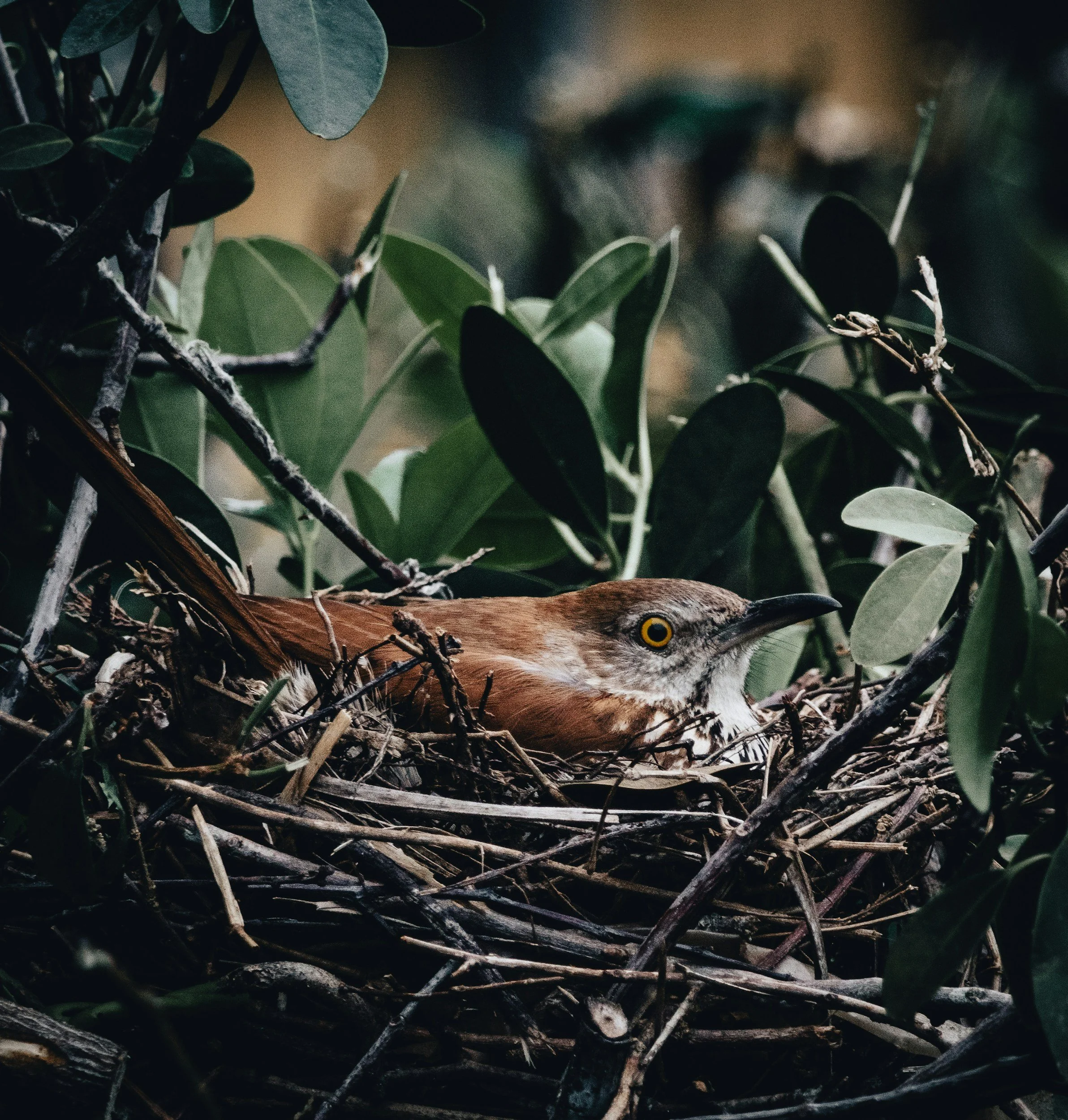
Image description: A Brown Thrasher on the nest. Photo courtesy of Mark Shideler, via Unsplash. That sound led them to discover a Brown Thrasher nest.
Everyone gathered at a respectful distance to observe and learn about the bird's nesting behavior. What happened next became one of Amanda's favorite memories from the program.
"One of those residents decided to document this nesting experience in their new nature journal. Over the following weeks, they continued to record these observations and reflect as the nesting story unfolded."
That single encounter sparked curiosity that extended far beyond the nest itself. Participants began discussing bird behavior, native plants, habitat, and other nesting experiences they had witnessed. A moment that began with a rustling sound in the bushes became an ongoing exploration of the natural world.
The story perfectly illustrates how birding often leads people toward a deeper understanding of conservation. When people become curious about birds, they naturally begin asking questions about what birds need to survive and thrive.
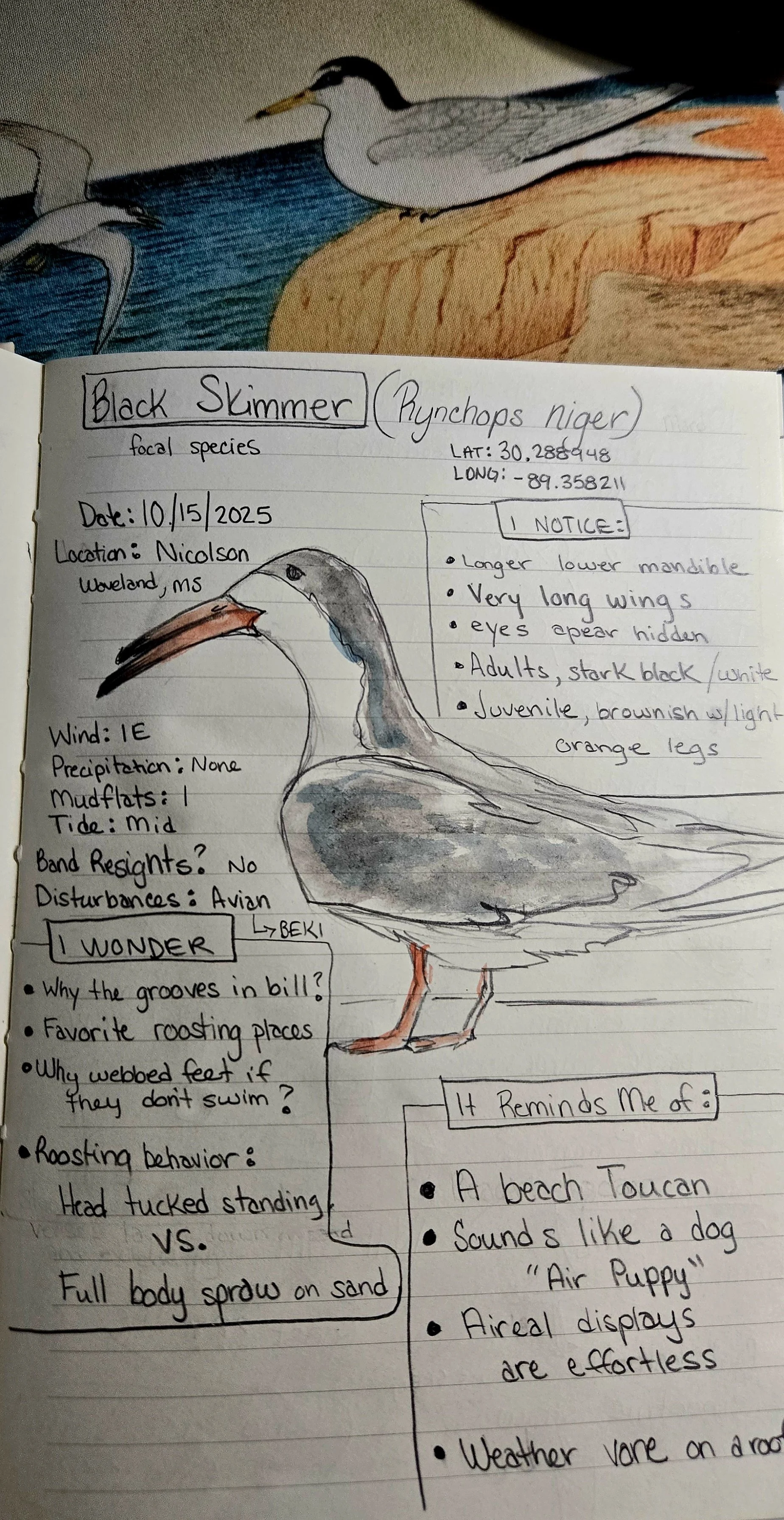
Image description: An open nature journal is displayed in front of a painting of Black Skimmers along a shoreline. The journal page is dedicated to the Black Skimmer (Rynchops niger) and includes watercolor sketches of the bird, handwritten field notes from Nicolson Wetland, Mississippi, and observations about its appearance, habitat, and behavior. Sections titled "I Notice," "I Wonder," and "It Reminds Me Of" record identification features, questions about the species, and personal reflections, combining scientific observation with creative nature journaling.The partnership has also taught Amanda and Jessica important lessons about accessibility.
As Jessica reflected:
"It really puts in perspective issues people face that you don't think about because you're not personally facing those issues."
Working with residents, evaluating accessible sites, and contributing reviews to the Birdability Map has helped the Audubon Delta team think differently about access and inclusion. Features and barriers that might once have gone unnoticed now stand out immediately.
For Amanda, one of the biggest lessons has been understanding that accessibility benefits everyone.
"Small adjustments, whether it's adaptive equipment or flexible programming, comfortable seating, allowing participants to engage at their own pace, this all can make a really tremendous difference."
But she is quick to point out that accessibility goes beyond physical access.
"It's about really creating that welcoming environment and spaces where people feel valued and heard."
The experience has also changed the way Amanda approaches her work.
"This program has created a unique opportunity for me to really see the world differently and realize or take the time to be more thoughtful in my personal approach."
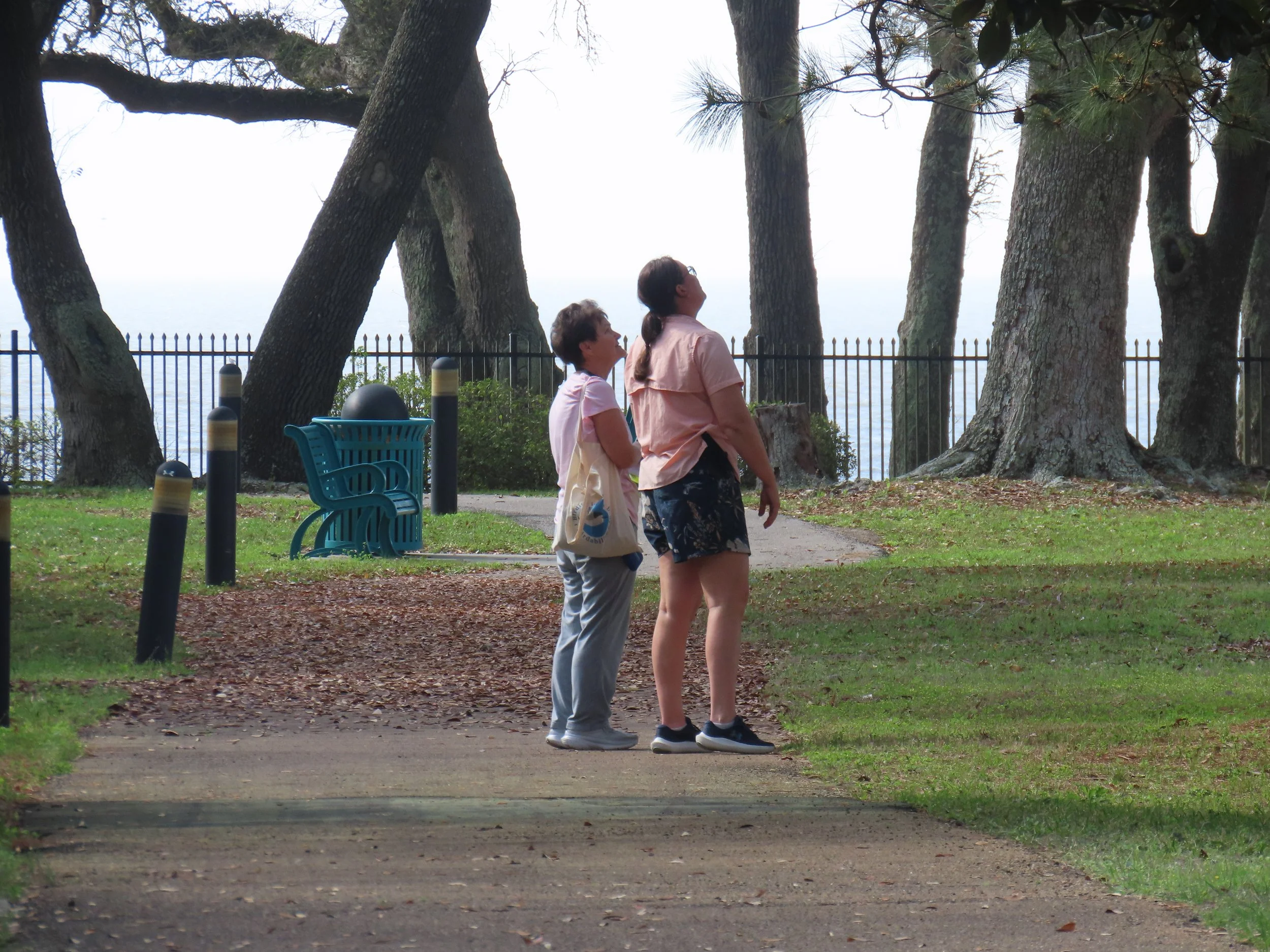
Image description: Amanda and a resident with a Birdability Outreach Program bag stand on a paved path looking up at a bird together. As the partnership continues to grow, Amanda hopes others interested in creating accessible birding opportunities will begin with one simple principle:
"Starting by building relationships and listening to the community that you hope to serve."
She encourages anyone interested in this work to ask participants what they need, what interests them, and how they want to engage with nature. Accessibility looks different for everyone, and the most successful programs are built not on assumptions, but on relationships.
What began as Birdability's first Outreach Program site has become an example of what is possible when accessibility, creativity, curiosity, and community come together. With support from the Christopher & Dana Reeve Foundation (2024/2025), Audubon Delta, and the staff and residents of the Armed Forces Retirement Home, the program continues to demonstrate that birding can be adapted in countless ways to meet people where they are.
Through birds, art, adaptive equipment, conversation, and shared discovery, residents are building connections not only with nature, but also with one another. And perhaps most importantly, they are reminding all of us that birding is about far more than identifying birds. It is about paying attention, finding wonder, and creating opportunities for everyone to belong.
