
Birding and PTSD
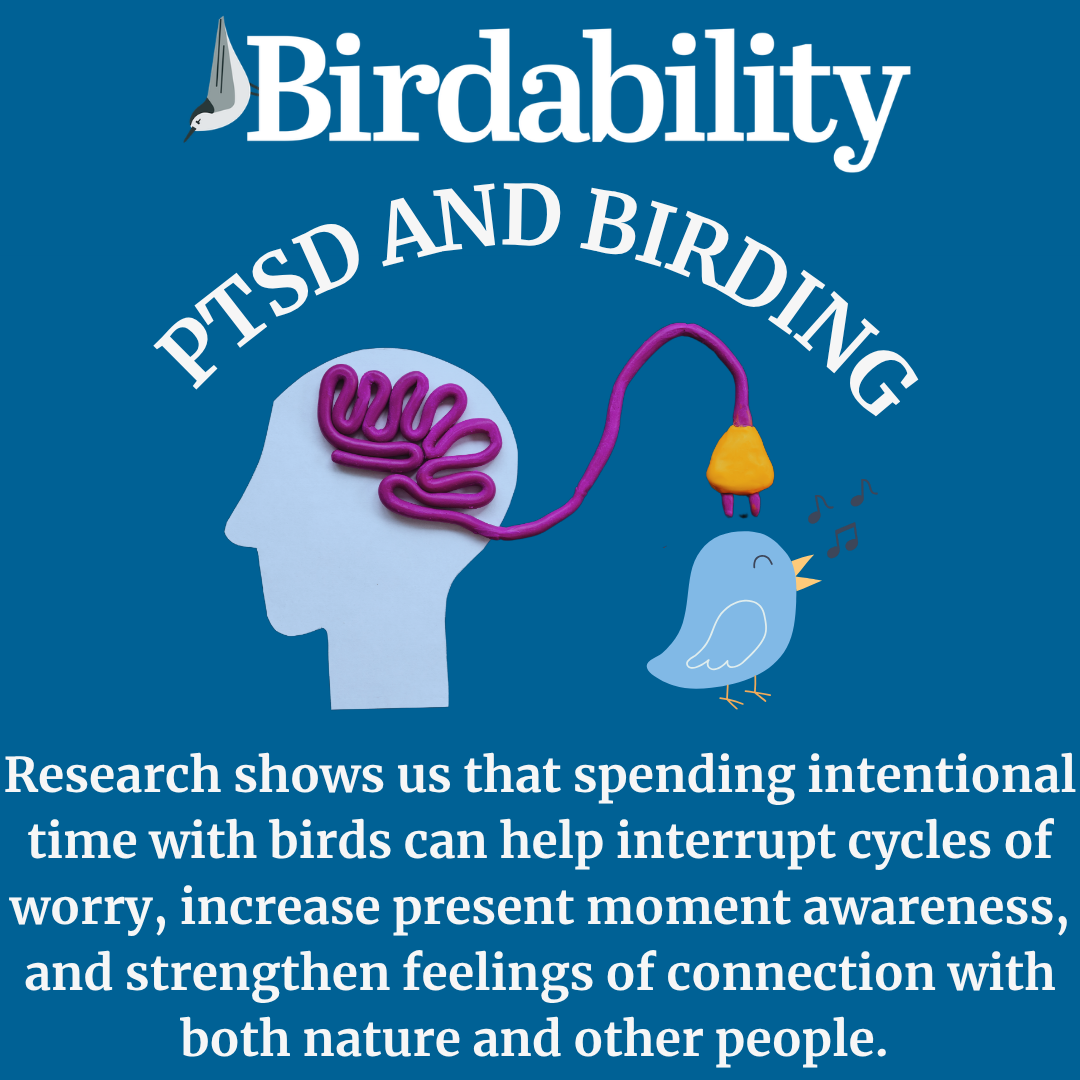
Image description: A square graphic with a teal blue background and the Birdability logo at the top. Below the logo, curved white text reads "PTSD AND BIRDING." Centered on the graphic is a simple illustration of a light blue human profile with a purple, looping line representing the brain. The line extends to a yellow plug that connects to a small blue songbird. The bird is singing, shown by small musical notes above its beak. White text at the bottom reads: "Research shows us that spending intentional time with birds can help interrupt cycles of worry, increase present moment awareness, and strengthen feelings of connection with both nature and other people."June is designated as National PTSD (Post-Traumatic Stress Disorder) Awareness Month. It aims to raise public understanding of the condition, reduce stigma, and highlight that effective, life-changing treatments are readily available for anyone, both veterans and civilians, who has experienced or witnessed trauma. We also recognize that many birders live with PTSD, Complex PTSD (C-PTSD), and other trauma-related conditions.
PTSD is often considered an invisible disability. The people around us may not see it, but that does not make its impacts any less real. PTSD can affect memory, concentration, energy levels, sensory processing, sleep, social interactions, emotional regulation, and a person's ability to navigate public spaces safely and comfortably.
For some people, PTSD develops after experiences such as military service, violence, abuse, accidents, natural disasters, or other life-threatening events. For many disabled people, PTSD can also be connected to disability itself. Traumatic injuries, chronic pain, progressive illness, repeated medical procedures, medical gaslighting, inaccessible environments, and the loss of independence that can accompany changes in health can all contribute to trauma.
Disability and PTSD are deeply intertwined in ways that are not always recognized.
Many people living with PTSD or C-PTSD also find that some of its effects overlap with what is often described as neurodivergence. Difficulties with executive functioning, sensory processing, attention, social interaction, emotional regulation, and information processing can all be part of the PTSD experience. While neurodivergence means different things to different people, many trauma survivors recognize that PTSD has changed the way their brains interact with the world.
Trauma can change the way we move through the world. PTSD and C-PTSD can affect any sense of safety in unfamiliar places. Some people find crowds overwhelming. Others may become exhausted by the mental work of planning, navigating, or staying alert in new environments. Those living with PTSD may find the world feels unpredictable to a frightening degree.
Image description: A square graphic with a teal blue background and the Birdability logo at the top. White text reads: "Trauma and PTSD can make the world feel unpredictable and birds help us remember differently. Chickadees still chatter through the winter. Swallows return in the spring. Migration continues whether our lives feel settled or not. There can be comfort in noticing those rhythms."As a result, many people develop their own adaptive ways of birding, including choosing familiar locations, birding with a trusted friend, sticking to predictable routines, taking shorter outings, carrying noise-reducing headphones, or spending more time listening than looking. All of these are access tools that allow people to continue connecting with birds in ways that work for their brains and bodies.
Image description: A square graphic with a teal blue background and the Birdability logo at the top. Centered below is white text that reads: "Birding asks us to notice what is happening outside ourselves. Is that a Carolina Wren? Did the hawk just circle overhead? Is that the first goldfinch of the season? For many people living with trauma, these moments of outward attention can offer a welcome break from the constant vigilance or intrusive thoughts that PTSD often brings."Birding can be a powerful support for people living with PTSD. It is not a treatment or a cure, and it cannot erase trauma, but many people find that spending time with birds helps create moments of connection, grounding, and calm.
Birds very gently invite us into the present moment.
The sound of a Carolina Wren singing from a fencepost. The flash of a goldfinch over a field. The slow, deliberate steps of a Great Blue Heron through a marsh. These experiences ask very little of us; instead, we simply get to notice and be present with the natural world.
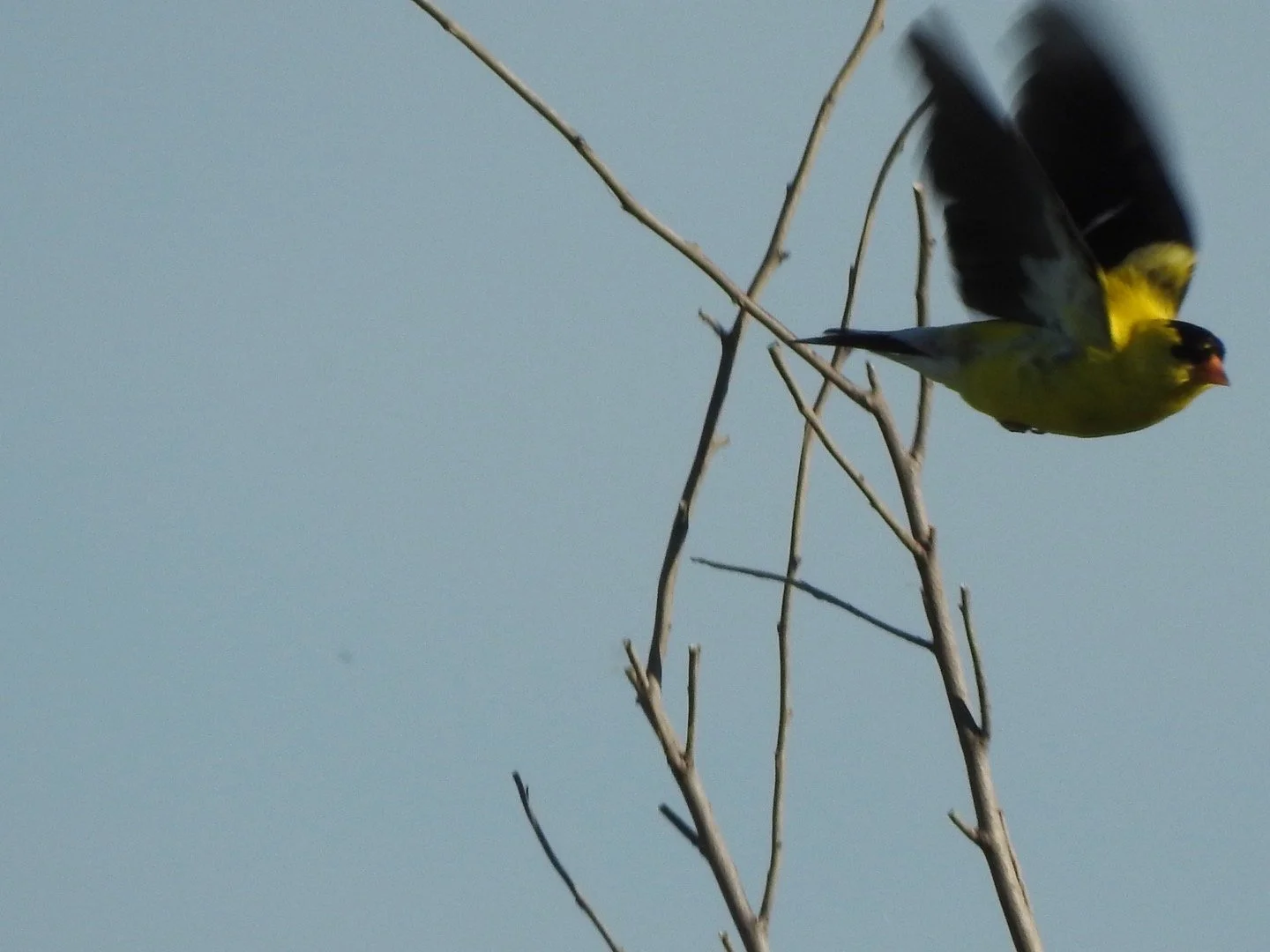
Image description: An American Goldfinch takes off from a branch, the bright gold yellow body and black wings in motion against a blue sky. Research continues to show that time spent in nature can support mental health and well-being. Many people with PTSD report that birding helps reduce feelings of isolation, provides structure during difficult periods, encourages gentle movement, and creates opportunities for community connection. Birding can also support emotional regulation by offering predictable, repeatable experiences that feel safe and familiar. Observing birds can help shift attention away from intrusive thoughts and toward something external and engaging, which can be especially helpful during moments of anxiety or hypervigilance. The act of listening for bird calls or scanning for movement can gently focus the mind, supporting concentration without overwhelming it. Keeping a bird list or participating in citizen science projects may provide a sense of purpose and accomplishment, even on difficult days. Birding fosters a feeling of connection to something larger than themselves, which can counter feelings of isolation or disconnection that often accompany trauma. You can learn more about some of these benefits on Birdability's Mental Health Benefits page.
For me, birding became part of my life after my PTSD diagnosis more than three decades ago.
A college roommate introduced me to birding at a time when I was struggling to understand what trauma had done to my life. Birds offered something steady and joyful. They gave me a reason to step outside and to feel part of the natural world. They gave me moments of curiosity when fear and hypervigilance threatened to consume everything else.
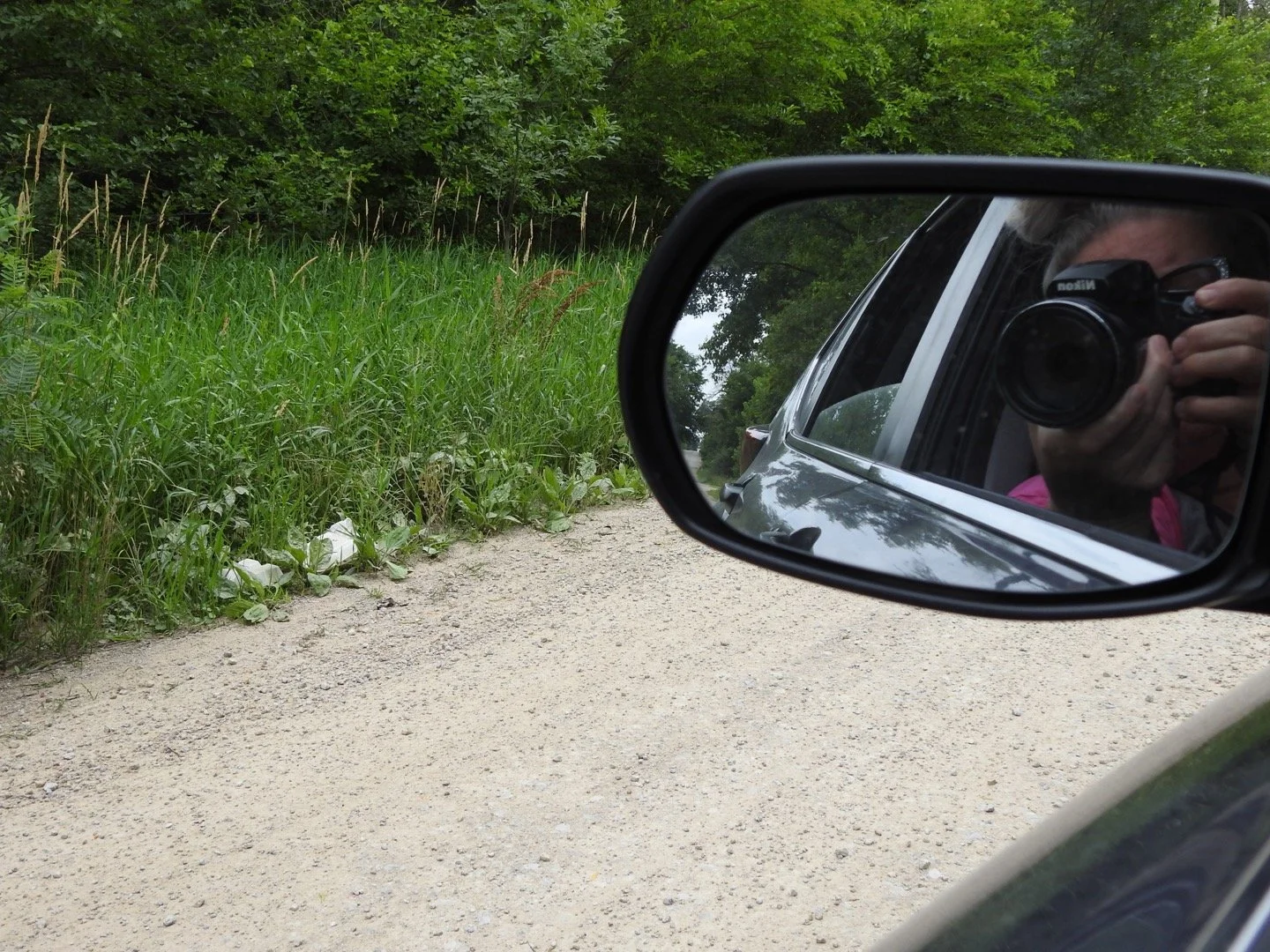
Image description: The author birding and taking photos from the car while on a wildlife drive at a local Wildlife Management Area. The driver's side mirror has a reflection of the Nikon camera and parts of the authors face and hands, and the road and trees/bushes along it are visible. Over the years, birding has remained a companion through many challenges, including disability, chronic illness, and changes in mobility. The practice of birding has changed alongside me. There were years when I could spend hours walking trails. Later, birding looked more like sitting quietly on my deck, scanning from a park bench, or exploring from a mobility scooter. Some days it has meant rolling down a car window and listening or taking photos along Iowa’s rural gravel roads.
What has surprised me is how little the birds seem to care about how I arrive. An Eastern Meadowlark will still sing from the shrub. A hawk will still circle overhead. A flock of waxwings will still descend on a fruiting tree whether I'm standing, sitting, rolling, or watching from a vehicle.
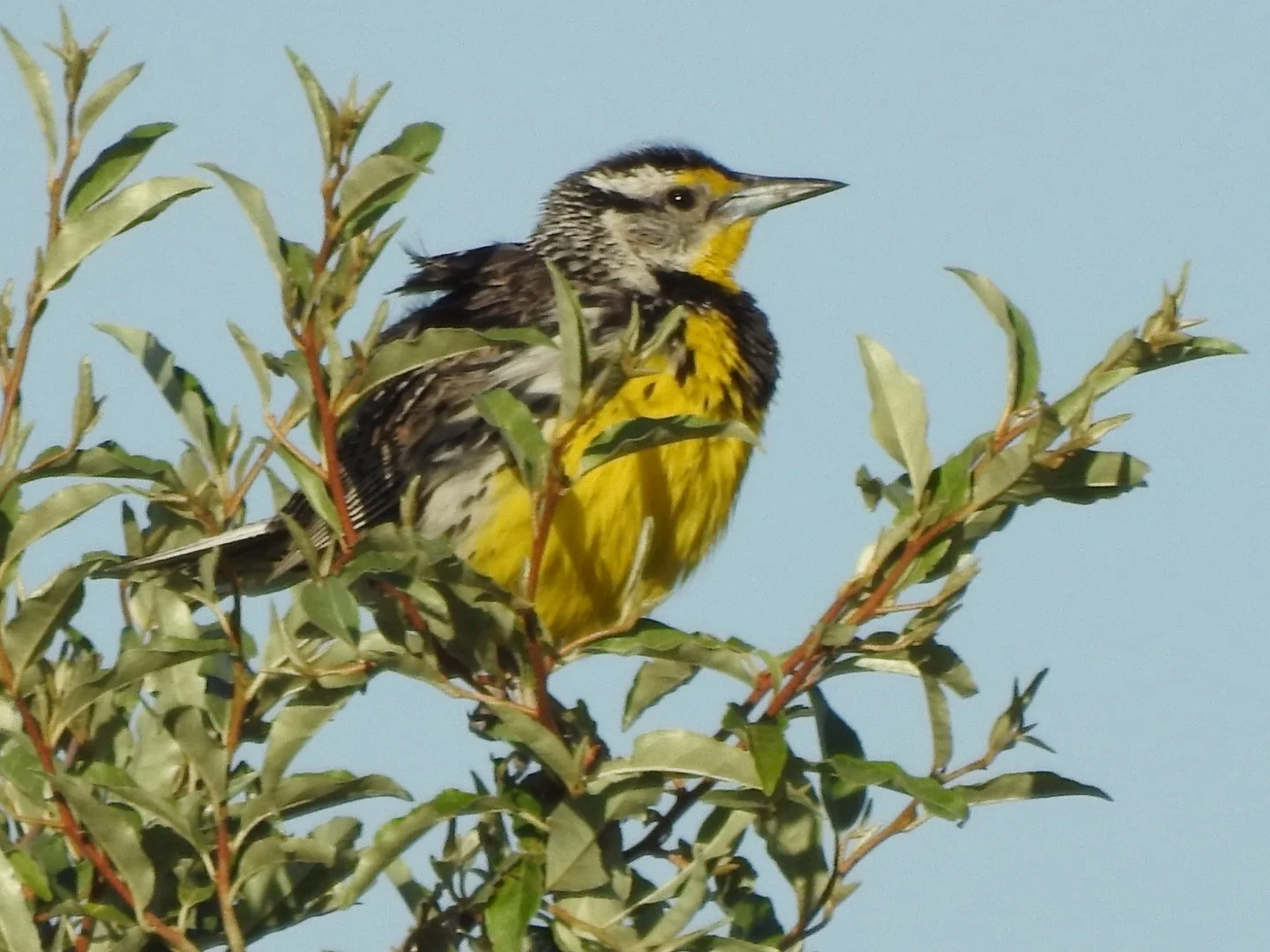
Image description: An Eastern Meadowlark, feathers puffed up from the wind, sits in a shrub along the gravel road in Eastern Iowa. The bright yellow breast and parts of the face standing out in stark contrast to the blue and green behind.One of the lessons Birdability tries to share is that there are many ways to bird. The same is true for healing. There is no single right way to connect with nature, birds, or community.
PTSD Awareness Month is a reminder that many birders carry experiences that may not be visible to those around them. And that some of us need quiet places and familiar routines when birding. Or we may need to know where the exits, restrooms, or benches are before we arrive. Some days we can join a group outing, and some days the best we can do is listen to birds from an open window. Personally, I usually use my naked eye or a monocular so that one eye is always available to scan for danger and be aware of my immediate surroundings.
Birdability has always been about making space for the many different ways people experience both birds and the world. That includes people living with PTSD, C-PTSD, and other trauma-related disabilities.
Whether birds are helping you reconnect with community, spend time outdoors, find a moment of calm, or simply get through a difficult day, we are glad you're here.
